A New Trial Will Test Whether Two Glasses of Fruit Juice a Day Can Lower Inflammation — Here’s What It Can and Can’t Tell Us
There are no results yet. That's why it's worth looking at now. How a study is designed tells you, before any headlines arrive, what its findings will and won't be able to prove.
RecipesForJuicing editorial team · Published
What Was Just Registered
On October 7, 2026, ClinicalTrials.gov published a new study record from Northwell Health. The title asks: "What is the Effect of Increased Consumption of Fruit Juice on Exercise Capacity and Inflammatory Biomarkers?" The principal investigator is Christopher Tanayan, MD, Northwell's director of sports cardiology. The study runs out of the Nicholas Institute of Sports Medicine & Athletic Trauma (NISMAT) in Manhattan and is listed as recruiting.
Here's the plan, as the registry entry describes it:
- Who: about 40 adults aged 18 to 65 with no symptoms, but with a previously measured C-reactive protein (CRP) between 1.5 and 9.9 mg/L. That's the "high-normal to mildly elevated" range. CRP is a blood marker the body produces more of when there's inflammation.
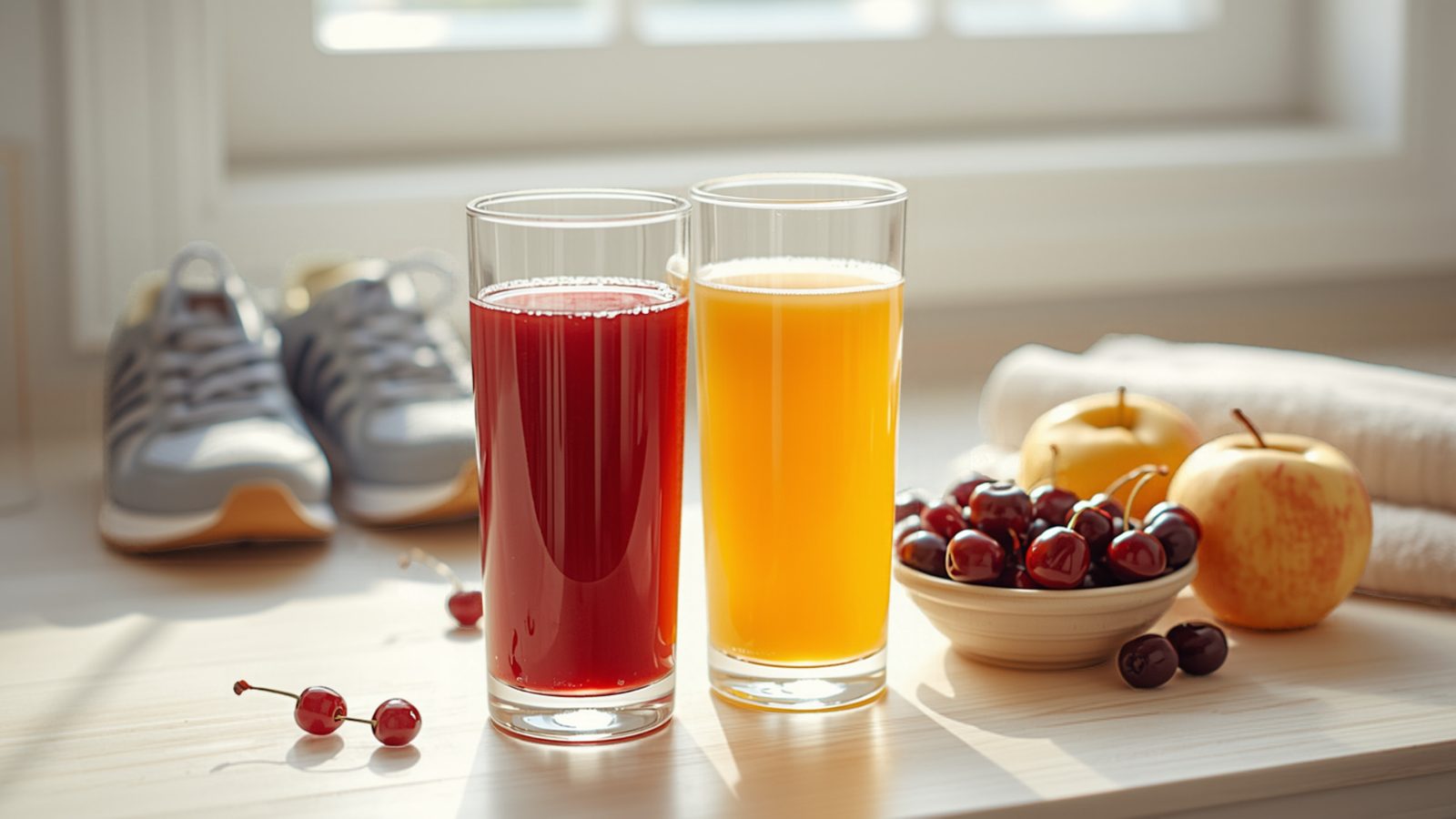
- What they drink: two 8-ounce juice servings a day for about two weeks, each containing 25 grams of sugar. Participants are randomly assigned to one of two commercially available fruit juices: an "active" juice and a "control" juice.
- Blinding: the study is listed as quadruple-masked, so neither participants, care providers, investigators nor outcome assessors know who is drinking which juice. The products aren't named.
- What's measured: the main outcome is the change in CRP from a finger-stick blood test. Secondary outcomes are the distance covered in a 6-minute walk test, hand grip strength, grip endurance, and a 30-second sit-to-stand test.
- Timeline: the estimated start was September 2026, with primary completion estimated for September 2028.
One clue about the juices sits in the exclusion list. People with a known allergy to apples or cherries can't take part. The registry doesn't say more than that, but it suggests apple and cherry are involved somewhere in the two products. Tart cherry juice has been studied for years for exactly this kind of question.
Why This Design Is Better Than Most Juice Headlines
A lot of what gets reported about juice and health comes from surveys that link people's habits to their health without showing cause and effect. We covered one of those two weeks ago in our look at whole fruit, juice and heart health. This study is different in a few useful ways:
- It's randomized and blinded, so whatever difference shows up is less likely to come from who chose to drink what.
- The comparison is juice against juice, not juice against nothing. Both groups get the same daily sugar dose. If the active group's CRP drops more, sugar and calories alone won't explain it. The difference would more likely point to what's in the active juice, such as its polyphenols, the plant compounds the study summary describes as having antioxidant and anti-inflammatory properties.
- It excludes people on NSAIDs and steroids, such as ibuprofen, aspirin and prednisolone, which would otherwise muddy an inflammation reading.
What It Won't Be Able to Tell You
Even if the results are positive, keep them in proportion:
- It's small and short. Forty people over two weeks can detect a short-term shift in a blood marker. It can't show long-term health effects.
- CRP is a marker, not an outcome. A lower CRP reading isn't the same as fewer heart attacks or less joint pain.
- It tests store-bought juice. The registry says both products are commercially available. A result would apply to that specific product, not automatically to whatever you press at home from different produce.
- The participants are narrow. People with heart disease, uncontrolled or insulin-dependent diabetes, IBS or Crohn's disease, or rheumatic disorders are excluded, so the results won't speak directly to them.
Know your sugar dose
See how your own recipe compares to 50 grams a day
The trial's two daily servings add up to about 50 grams of sugar. Enter your usual juice recipe to see its estimated sugar, potassium and vitamins per glass.
Open the Nutrient Calculator →What Earlier Research Found
The question isn't new, and the evidence so far is mixed. A good example is a 2019 randomized, double-blind trial from Sheffield Hallam University and the University of Sheffield, published in Nutrients. Thirty-six men who didn't do resistance training drank 250 mL of tart cherry juice, pomegranate juice, or an energy-matched placebo drink twice a day for nine days. On day five they did a hard eccentric arm workout. Strength loss, soreness, range of motion and creatine kinase (a muscle-damage marker) were tracked for four days afterward. The researchers found no statistically significant differences between the three groups. As they noted, both juices had looked promising in earlier work, but neither helped recovery in this setup.
That trial looked at muscle damage after a single hard workout. The Northwell study asks something different: whether everyday, low-grade inflammation in otherwise healthy adults shifts after two weeks of juice. That's why its results, when they arrive, will add something new rather than repeat old ground.
What to Do While You Wait
Nothing here changes how to juice sensibly today, but it does give a few practical pointers:
- Take the sugar seriously. The study's 50 grams a day is a deliberate research dose, not a recommendation. If you're making cherry, apple or other fruit-heavy juice at home, one small glass is a reasonable daily amount.
- Get polyphenols without all the sugar. Building a juice on vegetables, then adding a handful of cherries, berries or a little pomegranate for color and flavor, gives you those compounds at a fraction of the sugar. Our beet juice guide and juicing for energy recipes follow that pattern.
- Don't treat juice as medicine. If a doctor has told you your CRP is elevated, or you take anti-inflammatory or blood-pressure medication, ask them before adding a daily juice habit.
The Bottom Line
- Northwell Health registered a randomized, quadruple-masked trial on October 7, 2026, testing two commercially available fruit juices in about 40 adults with mildly elevated CRP.
- Participants drink two 8-ounce servings a day, 25 grams of sugar each, for about two weeks. CRP is the main outcome, with walking distance, grip strength and sit-to-stand performance as secondary measures.
- Comparing juice against juice with a matched sugar dose means any difference would point to what's in the active juice, not just its sugar or calories.
- Results are estimated for 2028. Earlier trials of tart cherry and pomegranate juice for exercise recovery have been mixed, including a 2019 trial that found no benefit.
This is a study to bookmark rather than act on. When the results come out, we'll cover what the active juice was and whether it moved the needle.
Source: ClinicalTrials.gov — "What is the Effect of Increased Consumption of Fruit Juice on Exercise Capacity and Inflammatory Biomarkers?" (NCT07862049), Northwell Health, first posted October 7, 2026, https://clinicaltrials.gov/study/NCT07862049. Background study: Lamb KL, Ranchordas MK, Johnson E, Denning J, Downing F, Lynn A, "No Effect of Tart Cherry Juice or Pomegranate Juice on Recovery from Exercise-Induced Muscle Damage in Non-Resistance Trained Men," Nutrients 11(7):1593, 2019, DOI 10.3390/nu11071593.
How Big Should Your Glass Be?
Work out how much produce you need for a sensible serving, so a fruit-heavy batch doesn't turn into one oversized glass.
Open Serving Calculator →